
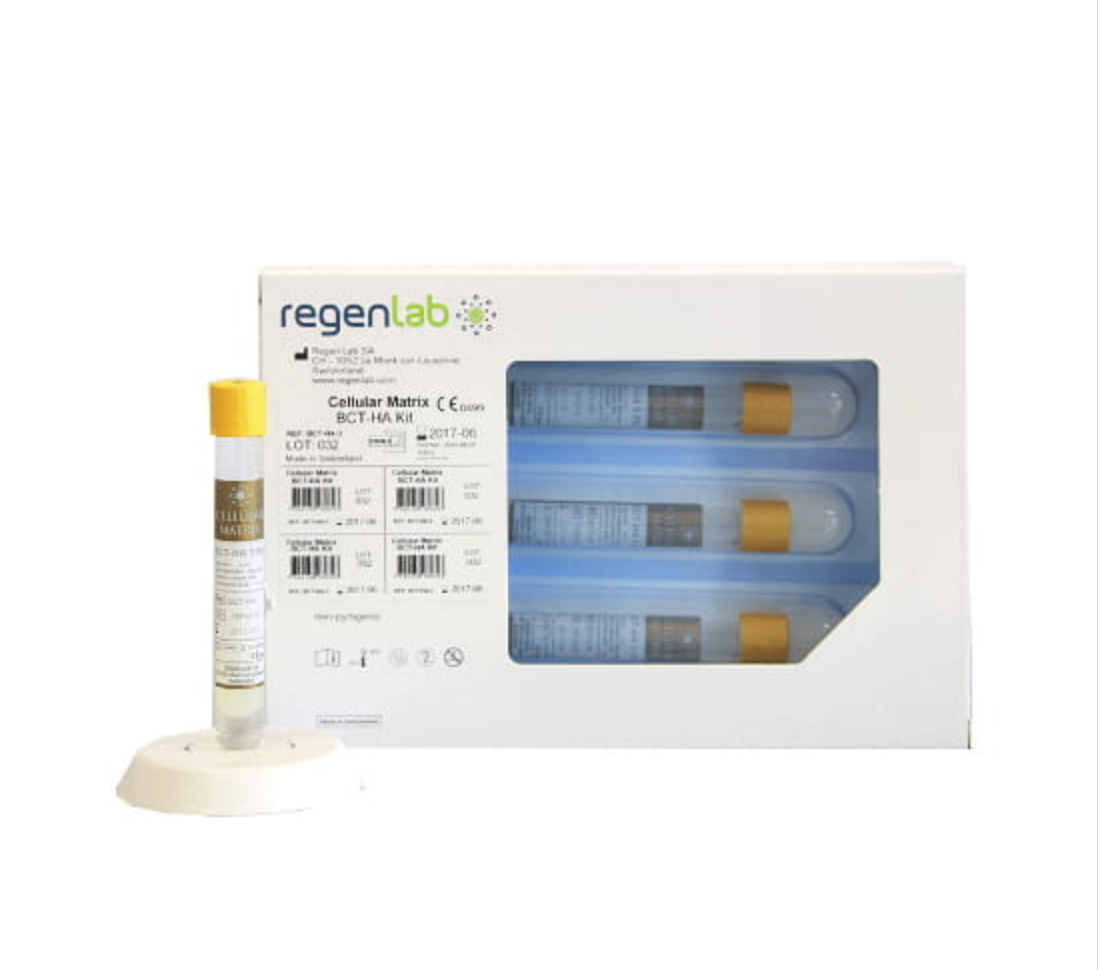
Cellular Matrix PRP PRP Separating Gel with Hyaluronic Acid
Cellular Matrix combines the moisturizing properties of hyaluronic acid with the biological stimulation of autologous platelet-rich plasma.
No additional accessories required.
Hyaluronic acid (HA) acts as a temporary skin substitute, while platelet-rich plasma stimulates surrounding cells.
The three-dimensional structure of hyaluronic acid is rapidly colonized by fibroblasts, which produce extracellular matrix components and promote the orderly regeneration of skin tissue.
Hyaluronic Acid (HA)
Successfully used in aesthetic medicine for over 25 years
Binds water and has a filling effect
Stimulates skin cell migration and proliferation
Nourishes and moisturizes the skin from within
Applied over 20 million times
Autologous Platelet-Rich Plasma (A-PRP)
Increases collagen production (Cheng, 2011)
Improves skin elasticity, tone, and thickness
Stimulates stem cell differentiation and proliferation
Activates angiogenesis
Adds volume
CELLULAR MATRIX PRODUCT CHARACTERISTICS
– The product contains 2 ml of natural, non-cross-linked, fermented hyaluronic acid (1550 kDa) at a concentration of 20 mg/ml (total 40 mg), a thixotropic cell-separating gel, and an anticoagulant sodium citrate solution.
– A 4 ml A-PRP/HA combination can be prepared in a single step and within a closed system using 4 ml of autologous blood.
– Simple and quick process.
– Immediate formation of a cell-friendly hyaluronic acid network, within which platelets are released.
– Significantly higher viscosity than A-PRP.
– Possibility of increasing the residence time and release of growth factors into the dermis.
– Positive effect on cell migration and differentiation.
– Treatment regimen: up to 3 injections into the dermis.
– 3 standard pharmaceutical-grade Regen vials, double-blistered and sealed with a 2FS Tyvek membrane in accordance with the ISO 11607 standard.
CONTRAINDICATIONS
Absolute contraindications: The PRP/HA preparation should not be administered to patients with a known hypersensitivity to any of the ingredients, including hyaluronic acid. Do not use in patients with hereditary or acquired hematological/coagulation disorders, such as platelet dysfunction syndrome, critical thrombocytopenia, coagulation disorders, or in patients with uncontrolled severe metabolic or systemic disorders. Do not treat patients with sepsis or acute infection in the surgical area. PRP/HA is not recommended for use in patients with partial or total knee replacements.
Relative contraindications: PRP/HA is not recommended for use in patients with malignant tumors, particularly those involving the hematopoietic or skeletal system or with metastases, within the last 5 years; with autoimmune diseases with the presence of antibodies and progressive disease (Hashimoto’s thyroiditis, rheumatoid arthritis, lupus, etc.); with a recent fever or illness; and with a platelet count less than 100,000,000/ml. Taking medications or dietary supplements that alter platelet function within 3 days may affect the effectiveness of treatment. Safety and efficacy have not been evaluated in children, pregnant, or breastfeeding women. PRP/HA is not recommended for use in patients with localized dermatological conditions at the injection site.
POSSIBLE SIDE EFFECTS
Blood sampling may cause damage to blood vessels, hematomas, superficial phlebitis, delayed wound healing and/or infection, temporary or permanent nerve damage, which may cause pain or numbness, and early or late infections. Local secondary inflammatory reactions may occur at the injection site after intra-articular injection. This may result in temporary pain, warmth, redness, and swelling of the joint or area treated with PRP/HA. The use of Icepacks a few minutes after injection or oral administration of a pain reliever (paracetamol) the day after injection may reduce these side effects. Nonsteroidal anti-inflammatory drugs (NSAIDs) should be avoided. Hypersensitivity, including rare cases of anaphylaxis, has been reported after hyaluronic acid injection. HA administration has also been reported to cause marked inflammatory reactions. Injection may lead to infection if general injection and aseptic precautions are not followed. Hypersensitivity, including rare cases of anaphylaxis, has also been reported after hyaluronic acid injection. HA administration has also been reported to cause marked inflammatory reactions. Injection may lead to infection if general injection and aseptic precautions are not followed. Reversible inflammatory reactions have been observed 1 or 2 weeks after microfollicular injection. Injection may lead to infection if general injection and aseptic precautions are not followed.


Reviews
There are no reviews yet